
Open-trench Construction Begins
Construction on the South Hillsborough Pipeline project is moving forward in many locations. Most of the work to this point has focused on tunneling operations, which occur mainly in one small area, such as an intersection or under a body of water.
About two of the project’s 26 miles are being built by trenchless technology (tunneling), but the rest will be installed by open-trench construction methods. This type of construction technique allows workers to install the pipe at a quicker pace and a lower cost.
What to Expect
Before construction begins, crews will trim tree canopies to make room for heavy equipment. Trees and shrubbery may also be removed from the right of way and temporary and permanent construction easements. During this time, motorists may experience temporary lane closures or short delays to ensure safety as crews remove overhead limbs.
Next, shallow wells will be installed and pumped continuously to remove shallow groundwater from the areas to be excavated. These dewatering systems must run 24 hours a day until construction in an area is complete. These systems include noise-minimizing diesel pumps and a small-diameter, temporary pipeline to direct water away from the construction area so trenches and tunnel shafts can be safely built, and proper soil compaction can be achieved.
Next, crews will excavate trenches and place trench boxes to keep workers safe while they are installing the pipe segments. After the pipe is installed, crews will backfill the trenches. Roads that are disturbed during construction will be re-opened to local traffic as soon as possible with temporary, drivable surfaces. Within six months of the pipeline being fully constructed and put into service, all construction areas will be restored to pre-existing conditions.
Construction in Your Neighborhood
About two weeks before construction begins in your neighborhood, you’ll see electronic message boards notifying you of upcoming construction. If you live along the route you will also receive door hangers about a week before construction begins.
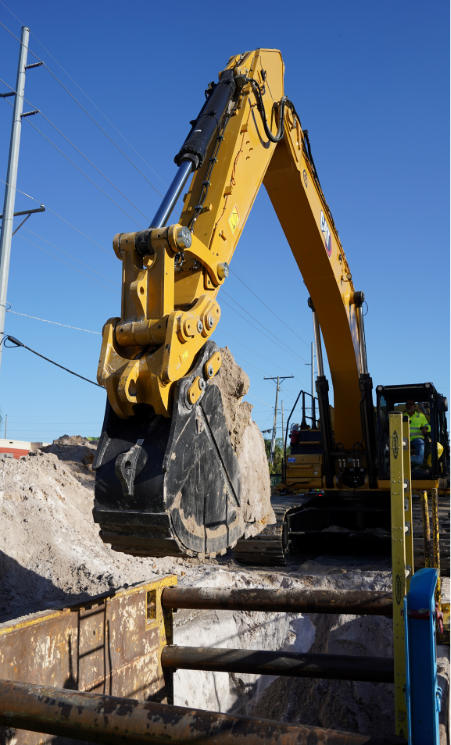
Right before construction begins, you’ll see detour signs and barricades to route traffic around construction zones. You will also see machinery, excavators, dump trucks and other equipment in the area, and can expect to hear noise associated with construction.
Our construction crews will use water trucks to suppress dust in work areas, and all trash will be picked up regularly. In some locations, temporary access roads will facilitate access to homes, subdivisions and residential streets and businesses. When your driveway or road is inaccessible, our community coordinators will be onsite to help residents access their homes.
The construction team anticipates moving about 30-50 feet every day during open cut construction, but this can vary based on weather, soil conditions and more. On average, individual homes will likely be impacted for a few days to a week, depending on location.
Why is the pipeline necessary?
Tampa Bay Water is building the South Hillsborough Pipeline to meet the growing water needs of Hillsborough County. The new pipeline will be up to five feet in diameter. Once completed, it will carry up to an additional 65 million gallons per day (mgd) of water from the Tampa Bay Regional Surface Water Treatment Plant in Brandon to Hillsborough County’s Lithia Water Treatment Plant and a new water treatment plant in the Balm area.